Why it matters
- Google’s 12 November 2026 Gemini 4 Hydrogen rollout into Google Search is the clearest documented consumer AI-search change of late 2026.[28][12]
- Google says Hydrogen improves complex-question handling, simultaneous query fan-out, links, tables and images in Search.[1][26]
- OpenAI, Google, Anthropic, xAI and Mistral document web access through separate search, grounding, fetch or connector tools rather than proving that every new model browses automatically.[2][25]
- Late-2026 releases from OpenAI, Google, Anthropic and Meta largely emphasized reasoning, coding, voice, computer use or agentic workflows.[6]
- Mind2Web 2 offers a benchmark for long-horizon browser-agent evaluation, but it predates the late-2026 models and does not measure their performance.[2][17]
Google’s 12 November 2026 rollout of Gemini 4 Hydrogen into Google Search is the clearest documented change to consumer AI search in late 2026. Google says the integration handles complex, multi-part questions, performs simultaneous query fan-out, and presents answers with structured information, images and links.[1]
Other releases from OpenAI, Google, Anthropic, Meta, xAI and Mistral expanded reasoning, coding, agentic workflows or tool use between September and November 2026. However, the vendor announcements distinguish those model capabilities from optional search, browsing, web-fetching or computer-use tools; a new model should not automatically be described as a natively browsing model.[2][3]
What happened?
Late-2026 model news followed three distinct tracks:
- Search-product integration: Google put Gemini 4 Hydrogen directly into Google Search worldwide on 12 November 2026. The update targets complex questions, intent understanding, simultaneous queries, richer links, tables and images.[1]
- API-level web access: OpenAI, Google, Anthropic, xAI and Mistral documented separate tools or connectors that let models search the live web or ground answers in current information.[4][5]
- Agentic model releases: Many model announcements focused on multi-step work, coding, computer use, voice, cybersecurity or tool calling rather than a new consumer search interface.[6]
The most consequential release for ordinary search users was therefore not simply a new model benchmark. It was the combination of Gemini 4 Hydrogen and Google Search’s existing retrieval and query-fan-out systems.[7]
Why does it matter?
The Google change makes the model part of the search experience rather than leaving it only inside an API or chatbot. Google says Hydrogen can interpret a user’s intent, break complicated questions into simultaneous queries, and return broader links alongside visual and structured answers.[1]
That affects how information is discovered. A page may be surfaced because it answers one of several related subqueries generated from the original request, not only because it matches the exact wording typed by the user. Google describes this as an upgrade to its query-fan-out technique and says it can connect users with sites they might not otherwise have found.[8]
The other vendors’ releases matter mainly for developers building AI search and browser agents. OpenAI’s web-search tool gives models current internet information and sourced citations in the Responses API.[9] Google’s Search grounding connects Gemini to real-time web content and returns URL or citation annotations.[10] Anthropic documents web search and web fetch as separate tools, while xAI and Mistral document their own web-search tools or connectors.[11][6]
That distinction is significant for visibility work. A model may be capable of reasoning about a web result, while the surrounding product decides whether to search, which queries to issue, which pages to retrieve and which sources to cite. The model release alone does not establish how a particular search surface ranks or cites websites.
What do we know—and what is not confirmed?
What is documented
- Gemini 4 Hydrogen was announced and made available across Google’s developer, enterprise and consumer surfaces on 12 November 2026.[12]
- Google Search received Gemini 4 Hydrogen globally on the same date.[1]
- Google documented multi-part question handling, simultaneous queries, broader links, tables and images as part of the Search upgrade.[1]
- Gemini’s API documentation describes Google Search grounding as a separate capability that can connect responses to current web information and citations.[10]
- OpenAI documents web search and computer use as separate API tools.[6][2]
- Anthropic documents web search, web fetch and computer use as separate tools.[6]
- xAI’s developer documentation lists web search, X Search and code execution as distinct tools.[13]
- Mistral documents a web-search connector separately from its Large 4 model announcement.[11]
What is not confirmed by these releases
The reviewed announcements do not establish that every late-2026 model automatically browses the web. OpenAI’s GPT-6 Astra, GPT-6 Sol, GPT-6 Luna, GPT-6.1 Sol and GPT-6.1 Terra announcements emphasize general intelligence, coding, computer use or professional work without documenting a new built-in search feature.[14]
Google’s Gemini 4 Argon and Gemini 4 Carbon announcements emphasize cybersecurity and agentic workflows, respectively, rather than presenting either release as a standalone web-search product.[12][7] Anthropic’s Opus 5.5, Sonnet 5.5 and Fable/Mythos 5.2 announcements likewise focus on model capability and autonomous work; the separate Claude documentation explains how web search can be enabled.[15]
Meta’s Muse releases describe agents, tool use, coding and long-horizon execution, but the cited release materials do not name web search or browser access.[6] Mistral Large 4 describes tool use and information gathering, while the web-search connector is documented separately.[11]
No source reviewed here provides a late-2026, apples-to-apples measurement showing that one newly released model produces better search visibility, citation rates or browser-agent accuracy than all competitors. The Mind2Web 2 benchmark provides a framework for evaluating long-horizon browsing and information-synthesis tasks, but it predates the releases discussed here and does not measure their performance.[16][17]
Late-2026 model and search timeline
| Model or search surface | Company | Release date | Search or browsing capability documented |
|---|---|---|---|
| Muse Spark 1.3 | Meta | 2 September 2026 | Tool use and context building are described; web search is not named.[18][6] |
| GPT-6 Astra | OpenAI | 3 September 2026 | The announcement focuses on computer use, coding, cybersecurity and science; no new search feature is documented.[2][3] |
| Gemini 3.8 Live | Google DeepMind | 15 September 2026 | Voice interaction and task execution are described; web search is not specified.[19] |
| GPT-6 Sol and GPT-6 Luna | OpenAI | 22 September 2026 | Different capability and cost balances are described; search is not specified.[2] |
| Claude Opus 5.5 | Anthropic | 22 September 2026 | Model capabilities are described; web search is available through a separate tool.[6] |
| Grok 4.7 | xAI | 21 September 2026 | The release emphasizes coding and knowledge work; xAI separately documents web-search tools.[13] |
| Claude Sonnet 5.5 | Anthropic | 28 September 2026 | Speed, cost, long-horizon work and image understanding are emphasized; search is separately documented.[20] |
| Gemini 4 Argon | Google DeepMind | 30 September 2026 | Cybersecurity and vulnerability discovery are emphasized; no search feature is specified.[7] |
| GPT-6.1 Sol | OpenAI | 29 September 2026 | Coding, computer use and professional work are emphasized; search is not specified.[14][2] |
| Mistral Large 4 preview | Mistral AI | 6 October 2026 | Agent and tool use are described; web search is separately available through a connector.[11] |
| GPT-6 in ChatGPT | OpenAI | 7 October 2026 | A ChatGPT deployment update replacing earlier models; no new search feature is documented in the cited release material.[2][4] |
| Claude Haiku 5.5 | Anthropic | 7 October 2026 | Browser use is cited as a suitable workload; a built-in web-search feature is not established by the release announcement.[8][15] |
| Muse Wonder and Muse Wonder Full | Meta | 12 October 2026 | Agentic personal and professional work is described; web search is not named.[6] |
| Muse Spark Open | Meta | 15 October 2026 | On-device agentic and coding work are emphasized; web search is not named.[21] |
| GPT-6.1 Terra | OpenAI | 26 October 2026 | Visual reasoning and computer use are emphasized; search is not specified.[14] |
| Mistral Large 4 weights | Mistral AI | 4 November 2026 | The announcement concerns the model weights, not a separate search feature.[11] |
| Images 2.6 | OpenAI | 4 November 2026 | Image generation release; web search is not specified.[22] |
| Gemini Omni 1.2 Flash | 5 November 2026 | Video generation and editing are emphasized; web search is not specified.[23] | |
| Claude Fable 5.2 and Mythos 5.2 | Anthropic | 9 November 2026 | Autonomous task work and judgment are emphasized; search is separately documented.[24] |
| Muse Ember | Meta | 9 November 2026 | Tool calls, coding subtasks, routing and document parsing are emphasized; web search is not named.[6] |
| Gemini 4 Hydrogen | 12 November 2026 | Rolled into Google Search globally; supports complex questions, simultaneous queries, links, tables and images.[1] |
How do search, grounding and browsing differ?
“Search capability” can describe several different technical layers:
- A search-product integration places a model inside a consumer search interface. Gemini 4 Hydrogen in Google Search is the clearest late-2026 example documented in the reviewed sources.[1]
- Search grounding lets an API call a search service and use retrieved material to produce a cited answer. Google documents this for Gemini through Google Search grounding.[11]
- A web-search tool gives a model a structured function for issuing searches and receiving web results. OpenAI, Anthropic and xAI document this pattern in their API materials.[5]
- Web fetch retrieves a specified page or resource after a URL is known. Anthropic documents web fetch separately from web search.[25]
- Computer use allows an application-controlled model to interact with a browser or graphical interface. OpenAI, Google and Anthropic document computer-use workflows separately from search tools.[3]
These layers can be combined, but they should not be treated as interchangeable. A model can support tool calls without having a built-in search interface, and a search product can use a model with retrieval systems that are not exposed as general-purpose browsing to developers.
Background: what is query fan-out?
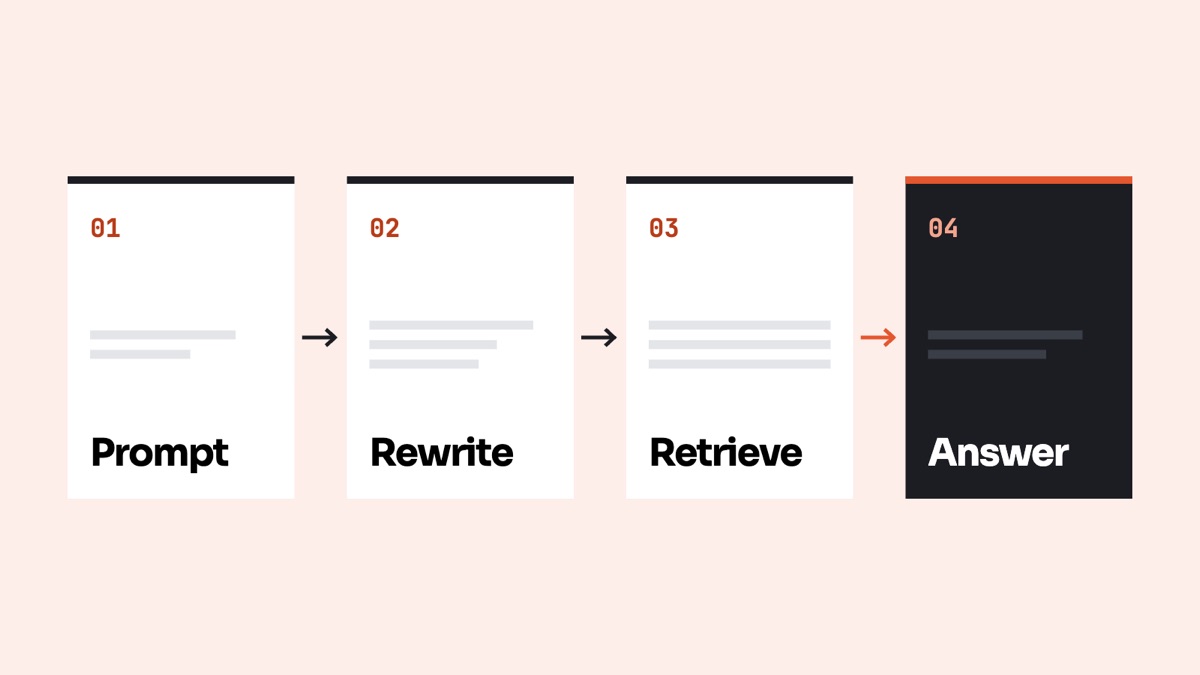
Query fan-out is the practice of decomposing one user request into multiple related searches or subqueries. Google says the Gemini 4 Hydrogen Search upgrade improves this process by conducting simultaneous queries and finding a broader range of useful links.[26]
For publishers, fan-out means that visibility may depend on answering the underlying subtopics implied by a question. The reviewed sources do not provide a public, independent measurement of how often Google generates particular fan-out queries, nor do they establish that every AI search product uses the same method.
What should developers and search teams watch next?
The late-2026 evidence suggests four practical areas of attention.
- Search-surface integration: Google’s Hydrogen rollout is the most direct signal that model releases can change how consumer search answers are composed and displayed.[1]
- Tool selection: OpenAI, Google, Anthropic, xAI and Mistral expose web access through tools or connectors, so applications can determine when current information is needed.[13][11]
- Citation behavior: Search systems increasingly expose links, source information or citation annotations, but the cited material does not establish consistent citation rules across vendors.[7]
- Agent evaluation: Browser agents need tests involving realistic, multi-step tasks rather than model-release claims alone. Mind2Web 2 is one published benchmark designed around long-horizon browsing and information synthesis.[17][27]
The defensible conclusion is narrower than “all new models now browse.” Late-2026 releases improved agentic and tool-use capabilities across several vendors, while Google made the most explicit consumer-search change by integrating Gemini 4 Hydrogen into Google Search on 12 November 2026.[12][2]
Frequently asked questions
Which model release changed AI search the most in late 2026?
Gemini 4 Hydrogen changed consumer AI search the most visibly because Google rolled it into Google Search globally on 12 November 2026.[12][28] Google documented complex-question handling, simultaneous query fan-out, broader links, tables and images as part of the update.[1][26]
Does GPT-6 automatically browse the web?
The cited late-2026 OpenAI release material does not establish that GPT-6 automatically browses the web.[4] OpenAI separately documents a web-search tool for API applications, so browsing depends on the product configuration and enabled tools rather than the model name alone.[2][3]
Can Claude 5.5 search the internet?
Claude’s web-search capability is documented as a separate feature that can be enabled for supported models, including Fable 5.2, Haiku 5.5, Sonnet 5.5 and Opus 5.5.[8] Anthropic’s platform documentation also separates web search, web fetch and computer use into distinct tools.[29][8]
Is Gemini 4 Hydrogen a search engine?
Gemini 4 Hydrogen is a model, while Google Search is the consumer search product into which Google integrated it.[12][30] The Search integration adds model-assisted handling of complex questions, simultaneous queries and structured or visual results; it does not make the model and the search product identical.[22][1]
What is the difference between web search and computer use?
Web search retrieves information through a search tool, while computer use allows an application-controlled model to interact with a graphical environment or browser.[2][31] OpenAI, Google and Anthropic document computer use separately from their search or grounding capabilities.[3][11]
Sources
- 1Google Search upgrade: Gemini 4 Hydrogen features blog.google
- 2Introducing GPT-6.1 Sol | OpenAI openai.com
- 3GPT-6 Astra: A new generation of intelligence | OpenAI openai.com
- 4Release Notes | OpenAI | OpenAI openai.com
- 5Web Search | SpaceXSI Docs docs.x.ai
- 6Introducing Our Smallest, Most Efficient Model: Muse Ember research.meta.ai
- 7Introducing Gemini 4 Argon deepmind.google
- 8Introducing Claude Haiku 5.5 \ Anthropic anthropic.com
- 9Web search developers.openai.com
- 10Grounding with Google Search | Gemini API | Google AI for Developers ai.google.dev
- 11Introducing Mistral Large 4 | Mistral mistral.ai
- 12Gemini 4 Hydrogen - Model Card — Google DeepMind deepmind.google
- 13Release Notes | SpaceXSI Docs docs.x.ai
- 14Introducing GPT-6.1 Terra | OpenAI openai.com
- 15Announcements \ Anthropic anthropic.com
- 16Mind2Web 2:Evaluating Agentic Search with Agent-as-a-Judge arxiv.org
- 17Mind2Web 2: Evaluating Agentic Search with Agent-as-a-Judge proceedings.neurips.cc
- 18Introducing Muse Spark 1.3 | Meta AI Research research.meta.ai
- 19New Gemini Audio models for developers blog.google
- 20Introducing Claude Sonnet 5.5 \ Anthropic anthropic.com
- 21Introducing Muse Spark Open, The Most Capable US Open‑Weight Model to Date | Meta AI Research research.meta.ai
- 22Introducing Images 2.6 | OpenAI openai.com
- 23Gemini Omni 1.2 Flash: 15-second video and lower pricing blog.google
- 24Introducing Claude Fable 5.2 and Claude Mythos 5.2 \ Anthropic anthropic.com
- 25Web search and web fetch claude.com
- 26Introducing Gemini 4 Hydrogen for Agentic Workflows blog.google
- 27NeurIPS Poster Mind2Web 2: Evaluating Agentic Search with Agent-as-a-Judge neurips.cc
- 28Model cards — Google DeepMind deepmind.google
- 29Web fetch tool - Claude Platform Docs docs.claude.com
- 30Model Card: Grok 4.7 media.x.ai
- 31Computer use tool platform.claude.com